
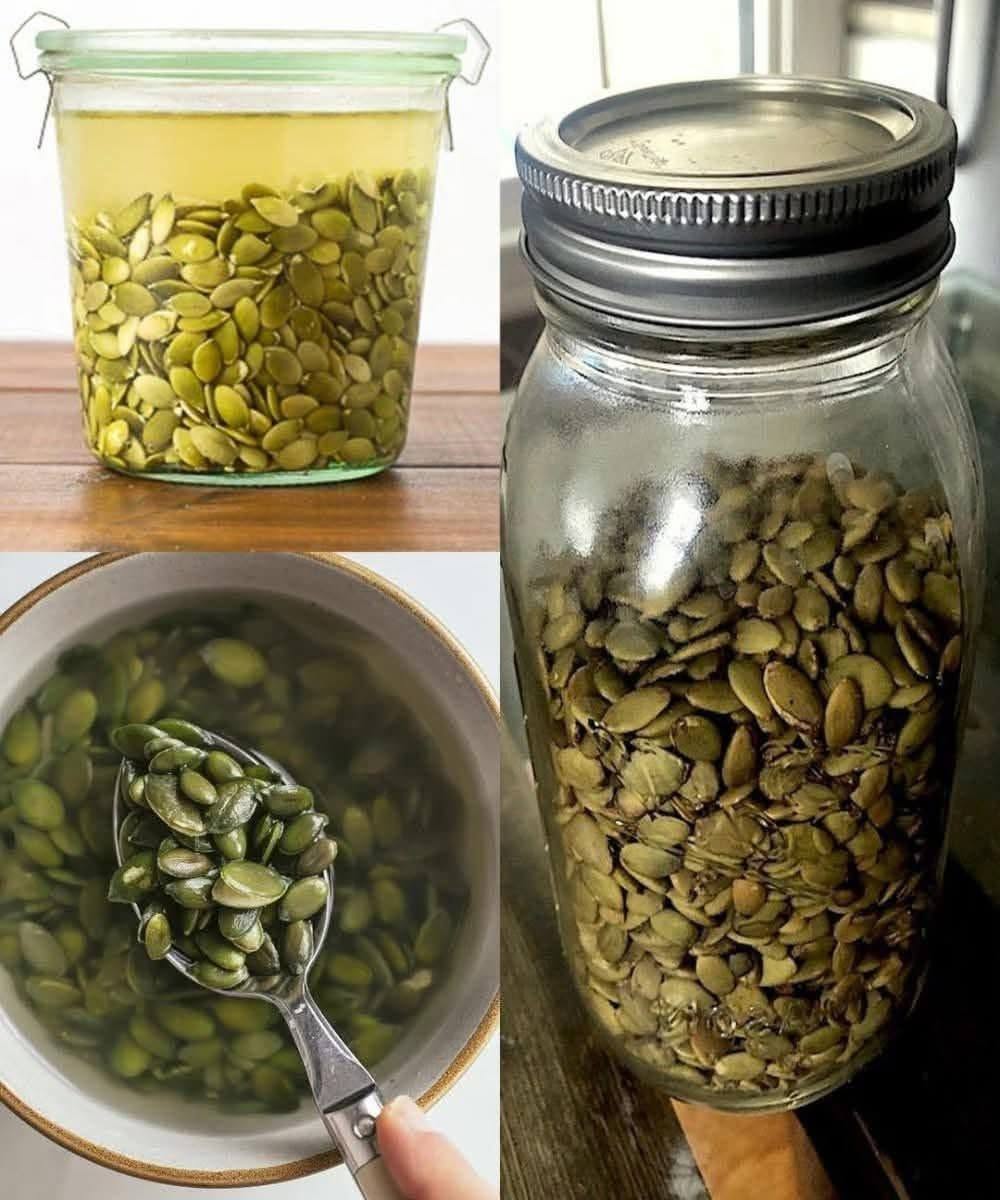
At first glance, the images may look unusual: jars and a bowl filled with green pumpkin seeds sitting in water. But these are pumpkin seeds, also known as pepitas, and soaking them is a traditional preparation method that some people use before eating or cooking them.
So why would anyone soak pumpkin seeds?
The answer isn’t simply about making them softer. Soaking can change their texture, make them easier to blend or cook, and may be useful when preparing seeds for certain recipes.
For people who regularly enjoy nuts and seeds, it’s also an interesting way to experiment with preparation methods.
But before filling a jar with seeds and water, it’s worth understanding what soaking actually does, how to do it safely, and whether it provides meaningful nutritional advantages.
What Are the Seeds in the Picture?
The seeds shown are pumpkin seeds.
Pumpkin seeds come from pumpkins and other varieties of squash. They can be eaten with their shells or, in the case of the smooth green seeds commonly sold as pepitas, without the hard outer shell.
They can be eaten:
- Raw
- Roasted
- Toasted
- Added to salads
- Mixed into granola
- Sprinkled over soups
- Added to breads
- Blended into sauces
- Ground into spreads
- Used as a snack
They have a mild, nutty flavor and a satisfying texture.
The green appearance makes them particularly recognizable.
Why Do People Soak Pumpkin Seeds?
Soaking seeds is an old food-preparation practice.
When pumpkin seeds are placed in water, they absorb moisture. This softens them and changes their texture.
Depending on what you plan to do with them, that can be useful.
For example, soaked pumpkin seeds can be easier to blend into a creamy sauce or plant-based recipe.
Some people also soak seeds because they believe the process reduces compounds known as phytates, which can bind certain minerals.
However, it’s important not to exaggerate this point.
Phytates naturally occur in many plant foods, including seeds, grains, nuts, and legumes. They are sometimes described negatively because they can reduce mineral absorption under certain circumstances.
But phytates aren’t simply “bad.”
They are part of the natural chemistry of plant foods and are also being studied for potentially beneficial biological effects.
Soaking is one of several traditional preparation methods that can alter phytate levels.
Does Soaking Make Pumpkin Seeds Healthier?
This is where things become more complicated.
Pumpkin seeds are already nutrient-dense foods.
They provide protein, unsaturated fats, fiber, and minerals such as magnesium, zinc, iron, and phosphorus.
Soaking doesn’t magically transform them into a completely different food.
The nutritional effect depends on factors such as:
- How long they are soaked
- Whether the soaking water is discarded
- Whether they are subsequently roasted
- Whether the seeds are eaten whole
- The original composition of the seeds
Soaking may reduce some water-soluble compounds, but it can also change the texture and preparation characteristics.
For most people, the bigger nutritional picture is simply that pumpkin seeds can be a useful addition to a varied diet.
Pumpkin Seeds Are Rich in Magnesium
One reason pumpkin seeds receive so much attention is their magnesium content.
Magnesium is an essential mineral involved in numerous processes throughout the body, including normal muscle and nerve function and energy metabolism.
Eating a varied diet that includes foods containing magnesium can help contribute to overall magnesium intake.
Pumpkin seeds are one convenient food source.
That doesn’t mean eating a huge quantity is necessary.
A modest serving can be incorporated into breakfast, salads, soups, yogurt, or snacks.
They Also Provide Plant Protein
Pumpkin seeds contain protein, which is one reason they are popular among people looking for plant-based foods.
Protein helps support the body’s tissues and contributes to normal growth and maintenance.
Adding a small amount of pumpkin seeds to a meal can increase its protein content while also contributing fats and minerals.
Try sprinkling them over:
Oatmeal
Greek yogurt
Salads
Roasted vegetables
Soups
Rice bowls
Homemade bread
Their mild flavor makes them surprisingly versatile.
ADVERTISEMENT
What About Healthy Fats?
Pumpkin seeds contain mostly unsaturated fats.
Dietary fats are essential because they help the body absorb fat-soluble vitamins and provide energy.
Replacing some foods high in saturated fat with foods containing unsaturated fats is generally consistent with heart-healthy dietary patterns.
That doesn’t mean pumpkin seeds should be eaten without limits.
They are calorie-dense, so portion size still matters.
A handful can be satisfying, but continuously eating large quantities can add up quickly.
What Is the Best Way to Soak Pumpkin Seeds?
If you want to experiment with soaking, the process is straightforward.
Start with clean pumpkin seeds.
Place them in a clean bowl or container.
Cover them completely with fresh water.
Some people add a small amount of salt.
Allow them to soak for several hours.
After soaking, drain the water and rinse the seeds thoroughly.
At this point, they can be used in recipes or dried before roasting.
The exact soaking time can vary depending on the intended use.
There isn’t one universally required soaking period for pumpkin seeds.
Should You Keep the Soaking Water?
Generally, if you’re soaking seeds as a preparation step, you would discard the soaking water rather than treating it as a beverage.
The water may contain compounds released from the seeds during soaking.
Rinse the seeds with fresh water afterward.
This is particularly important if you’re trying to improve the seeds’ flavor or texture.
Can You Eat Soaked Pumpkin Seeds Raw?
Technically, soaked pumpkin seeds can be eaten after draining and rinsing, provided they have been handled hygienically.
However, soaking introduces moisture, which can create conditions favorable to microbial growth if the seeds are left at room temperature for extended periods.
That’s why food safety matters.
If you’re soaking seeds, use a clean container and clean water. Keep them refrigerated if they will not be used promptly, and avoid leaving wet seeds sitting around for long periods.
If they develop an unusual smell, sliminess, visible mold, or other signs of spoilage, discard them.
What About Roasting Them After Soaking?
This is one of the most practical uses.
After soaking, drain and rinse the seeds.
Then dry them thoroughly.
You can season them with ingredients such as:
- Salt
- Black pepper
- Garlic powder
- Paprika
- Chili powder
- Cumin
- Dried herbs
Spread them in a single layer on a baking sheet and roast until they become dry and crisp.
The result can be a crunchy homemade snack.
The important part is making sure the seeds are sufficiently dried before storing them.
Moisture left behind can shorten their shelf life.
Why Do Some People Soak Seeds Overnight?
Overnight soaking is common in many traditional food-preparation methods.
The idea is simple: giving the seeds more time in water allows them to absorb moisture.
However, longer isn’t always better.
If seeds are soaked for too long, particularly at warm temperatures, fermentation and spoilage can become concerns.
For home preparation, cleanliness, temperature, and proper storage are more important than chasing a specific number of hours.
ADVERTISEMENT
Can You Blend Soaked Pumpkin Seeds?
Yes.
This is actually one of the most interesting uses.
Soaked pumpkin seeds become softer and can be easier to blend.
You can combine them with water, herbs, garlic, lemon juice, spices, or other ingredients to create creamy sauces and dressings.
They can also be incorporated into plant-based recipes where a creamy texture is desired.
This makes pumpkin seeds more than just a crunchy topping.
They can become part of the structure of a dish.
Pumpkin Seed Sauce
A simple pumpkin-seed sauce can be made by blending soaked seeds with:
- Water
- Lemon juice
- Garlic
- Salt
- Fresh herbs
- Black pepper
The result can be adjusted according to taste.
Add more water for a thinner dressing.
Use less water for a thicker spread.
Add herbs for freshness.
Add chili for heat.
This is a good example of how changing the preparation of an ingredient can open up completely different culinary possibilities.
Can Soaked Pumpkin Seeds Be Used in Smoothies?
They can.
Once properly soaked and rinsed, pumpkin seeds can be blended into smoothies.
Because they have a mild flavor, they can work with ingredients such as:
- Banana
- Berries
- Dates
- Cocoa
- Cinnamon
- Yogurt
- Oat milk
Blending them can produce a thicker, creamier texture.
However, you don’t need to soak them specifically for a smoothie if your blender can handle dry seeds well.
What About Digestion?
You’ll often see claims online that soaking seeds makes them dramatically easier to digest.
The reality is more nuanced.
Some people may find soaked seeds more comfortable to eat because the texture becomes softer.
Soaking can also alter certain compounds present in seeds.
But there is no guarantee that soaking will solve digestive problems for everyone.
Individual tolerance varies.
If pumpkin seeds consistently cause digestive discomfort, simply soaking them longer isn’t necessarily the answer.
How Many Pumpkin Seeds Should You Eat?
There isn’t one universal amount that every person should eat.
Pumpkin seeds are nutrient-rich but also energy-dense.
A small handful can be enough to add flavor and nutrients to a meal.
Instead of thinking about pumpkin seeds as a food that must be consumed in huge quantities, think of them as one component of a varied diet.
You can sprinkle them over meals or enjoy a modest serving as a snack.
More isn’t automatically better.
Can Pumpkin Seeds Help With Sleep?
Pumpkin seeds are sometimes promoted online as a “sleep food” because they contain nutrients involved in normal physiological processes.
However, it’s important not to turn that into a promise that eating pumpkin seeds will cure insomnia or guarantee better sleep.
Sleep is influenced by many factors, including stress, environment, routines, medications, and overall health.
Pumpkin seeds can be part of a balanced diet, but they aren’t a sleeping pill.
ADVERTISEMENT
What Makes Pumpkin Seeds So Popular?
Part of their popularity comes from their convenience.
They’re small.
They’re portable.
They don’t require complicated preparation.
They can be eaten alone or incorporated into meals.
And they provide several nutrients in a relatively small serving.
They’re also versatile enough to work in both sweet and savory dishes.
That combination makes them an easy pantry staple.
Raw vs. Roasted Pumpkin Seeds
Both versions have their place.
Raw pumpkin seeds have a softer, more subtle flavor.
Roasted pumpkin seeds develop a deeper, nuttier flavor and crunchy texture.
Roasting also allows you to add seasonings.
A little salt and paprika can completely change the experience.
If you prefer softer foods, soaked seeds may be more appealing.
If you love crunch, roasting is probably the more attractive option.
What About Pumpkin Seeds With Their Shells?
Pumpkin seeds can be sold with their outer shells intact.
The shell provides additional fiber, but it can also be harder and more difficult to chew.
Pepitas are typically the green inner seed without the hard white shell.
The images appear to show shelled pumpkin seeds.
That makes them particularly convenient for soaking, blending, roasting, and adding directly to recipes.
A Simple Pumpkin Seed Snack
Want to turn them into a snack?
Try this basic method:
Ingredients
- Pumpkin seeds
- A small amount of oil
- Salt
- Black pepper
- Paprika
Method
- Rinse the seeds.
- If desired, soak them for several hours.
- Drain thoroughly.
- Dry them very well.
- Toss with a small amount of oil and seasonings.
- Spread them on a baking tray.
- Roast until golden and crisp.
- Allow them to cool before storing.
The result is crunchy, savory, and easy to customize.
Don’t Store Wet Seeds at Room Temperature
This is one of the most important practical points.
The photographs show pumpkin seeds submerged in water inside containers.
If you’re going to recreate this at home, don’t simply leave a jar of wet seeds sitting on the kitchen counter indefinitely.
Moist foods can spoil more quickly than dry seeds.
If you’re soaking seeds for culinary use, prepare a reasonable amount, use clean equipment, and refrigerate them when appropriate.
For longer storage, thoroughly drying or roasting the seeds is generally more practical than keeping them wet.
The Bottom Line
Pumpkin seeds are already a nutritious and versatile food.
Soaking them can change their texture and may alter certain naturally occurring compounds, but it isn’t a magical process that suddenly makes them dramatically healthier.
Their biggest advantage is their nutritional profile and versatility.
You can eat them raw, roast them, blend them into sauces, sprinkle them over salads, add them to oatmeal, or incorporate them into homemade snacks.
And if you enjoy experimenting in the kitchen, soaking them can be an interesting preparation method to try.
The images certainly make one thing clear:
There are many more ways to enjoy pumpkin seeds than simply eating them straight from the bag.
 Have you ever soaked pumpkin seeds before?
Would you rather eat them raw, roast them until crunchy, or soak and blend them into a creamy recipe?
Tell us how you prepare pumpkin seeds at home!