
Not because he has morals.
Because his employers didn’t pay him enough to be loyal to prison.
He gives names.
He gives dates.
He gives a trail that leads right into the polished center of your mother’s empire.
It’s a board member.
A man who once toasted your mother’s health with expensive whiskey.
A man who argued for “succession planning” a little too often.
His motive is clean and ugly: if your mother dies, her shares trigger a clause that redistributes power.
And if power redistributes, he becomes king.
He assumed your mother’s death would be natural enough to avoid questions.
He assumed her headaches would look like age.
He assumed your grief would keep you distracted.
He didn’t count on Zoé.
When you confront him, you don’t do it in the boardroom.
You do it in a quiet private office with a camera recording everything and lawyers waiting outside.
He smiles at you like you’re still the obedient child of the matriarch.
“You’re overreacting,” he says.
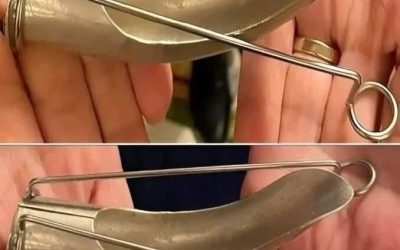
You place the photo of the black seed on the desk.
Then you place the video still of his infiltrator.
Then you place the signed payment records.
His smile dies by inches.
He tries to bargain, to charm, to threaten.
You let him talk until his words become a rope.
Then you cut it.
He’s arrested.
The news breaks.
Your company stock trembles, then steadies when you announce reforms, transparency measures, and a publicly audited governance model.
People call your mother “lucky.”
They call you “ruthless.”
They call Zoé a “mysterious hero” in headlines that don’t know how to name a working woman without turning her into a myth.
But you know the truth.
Luck didn’t save your mother. Attention did.
And attention is something your family never gave to the people who kept the lights on.
In the quiet that follows the scandal, your mother asks for a mirror.
She studies her own face, the lines, the hardness, the softness returning.
Then she says, “I don’t want to die with my hands closed.”
You don’t understand at first.
Then she begins to do what she should have done decades ago.
She opens the accounts that were always locked behind her fear.
She funds Elena’s son’s long-term treatment, but she makes it conditional on recovery milestones, not pity.
She gives Elena a modest, stable stipend with counseling attached, not as a gift, but as a lifeline that can’t be weaponized.
And she makes you sign documents that shift power away from single hands forever.
“This is how you prevent poison,” she tells you.
“Not by buying more locks. By removing the cages.”
Months pass.
The mansion feels less like a fortress and more like a home, which is somehow more unsettling because you didn’t realize how much of your life was lived on alert.
You start eating dinner with your mother, not in silence, but in conversation.
She tells you stories you’ve never heard.
About your father. About her childhood. About the first time she realized money could make people obey.
She admits she liked that obedience too much.
And you admit you did too.
Zoé stays employed, but not as “the invisible cleaner.”
She becomes head of a new internal safety and ethics unit, trained and paid, her experience respected without being romanticized.
She hates the attention, but she accepts the role because she knows power changes only when someone stubborn stands in the doorway.
One evening, your mother asks you to walk with her through the garden.
The air is warm, and the roses smell honest, not like perfume trying to lie.
She moves slowly, but she doesn’t look fragile.
“I thought I was protecting you,” she says, looking at the hedges like they might answer.
“I thought control was love.”
You swallow.
You want to tell her it’s okay, to smooth the past like it’s a wrinkled sheet.
But you don’t.
You say, “Control was fear wearing a crown.”
And your mother nods, as if she’s relieved you finally said it.
At the end of the path, she stops and looks at you.
Her eyes hold a kind of tired peace.
“If I had died,” she says softly, “you would have inherited an empire of enemies and a family full of ghosts.”
You feel the weight of what almost happened.
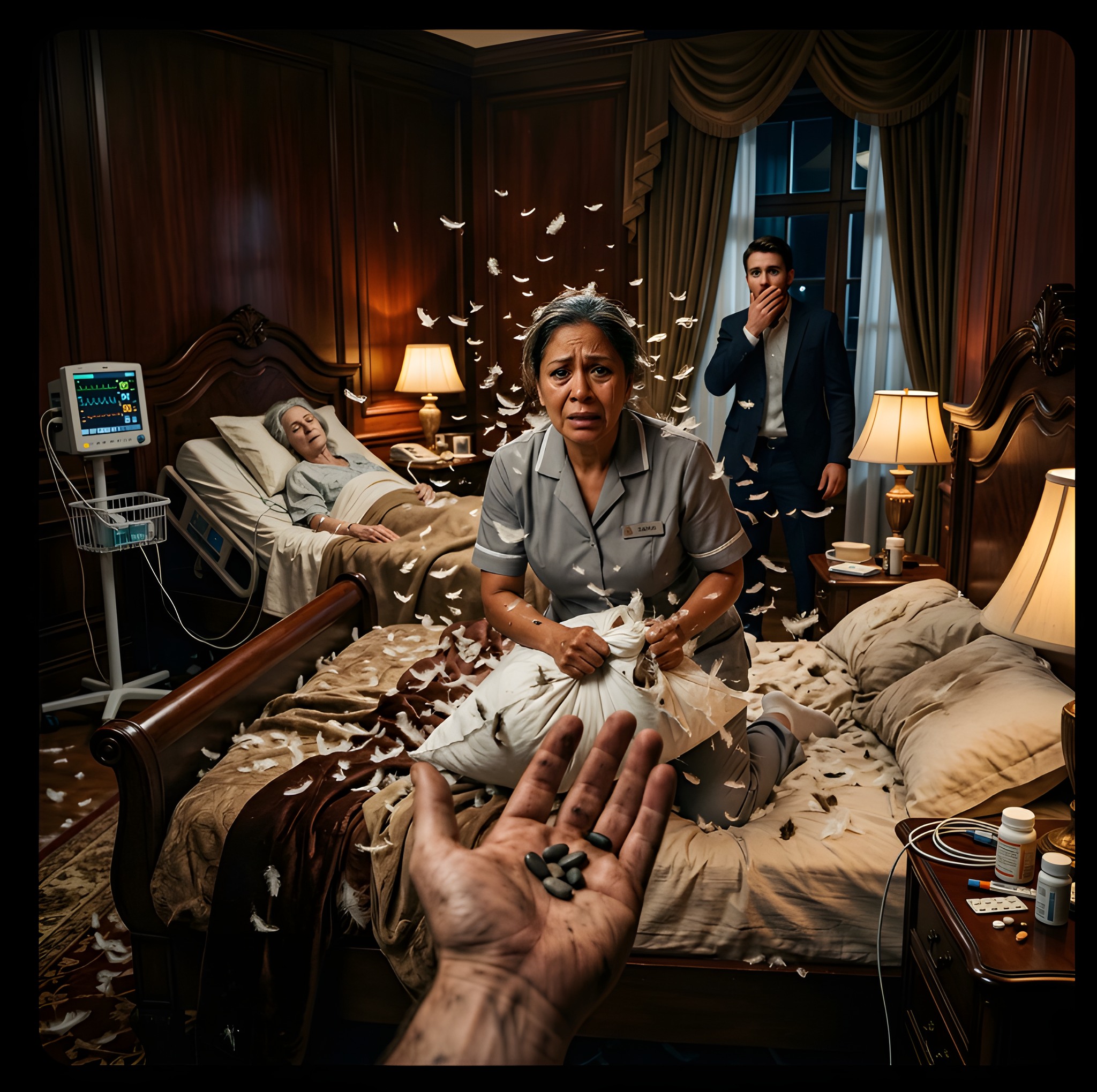
The pillow. The gas. The slow erasure.
How easily it could have been called “natural.”
“But I didn’t die,” she continues.
“And that means we get to choose what this becomes.”
You think of Elena, rebuilding her life with trembling hands.
You think of Zoé, whose hands saved a woman who never saw her.
You think of yourself, a man who believed money could solve everything until a seed proved otherwise.
You realize the ending isn’t punishment.
It’s transformation.
A year later, you host a foundation gala, but it doesn’t feel like theater.
You announce a program for rehabilitation funding, not just for the rich, not just for relatives, but for employees’ families too.
You watch people blink, confused, as if empathy is an unusual line item.
Your mother sits beside you, not as a tyrant, but as a witness.
Elena attends quietly, sober-eyed, humbled.
Zoé stands near the back, hands folded, refusing to be displayed like a trophy.
When the speeches end, you step offstage and walk to Zoé.
You don’t thank her like a billionaire tossing coins.
You thank her like a human.
She nods and says, “Don’t thank me.
Just don’t forget what you learned.”
You don’t.
Because now you understand something that no scan, no specialist, no billionaire strategy can guarantee.
The most dangerous poison isn’t always in a vial or a seed.
Sometimes it’s in a family rule that says suffering is “discipline.”
Sometimes it’s in a system built to trap people until they bite.
Sometimes it’s in the belief that power means never having to listen.
And when you finally learn to listen, truly listen, you discover the quietest truth of all:
There aren’t monsters under the bed.
There are wounded people inside the house, making desperate choices when they feel they have no door.
So you build doors.
And for the first time in your life, you feel like you’re not just protecting an empire.
You’re healing a home.
THE END
See more on the next page