
From the forty-third floor of his downtown Seattle penthouse, Grant Whitaker could see the whole city laid out beneath him—the ferries crawling across Elliott Bay, the office towers burning with late-night lights, the dark shape of the Olympics beyond the water. Seattle had made him rich, then richer, then untouchable. He had learned early that patience was useful, mercy was expensive, and control was the closest thing to safety a man could buy.
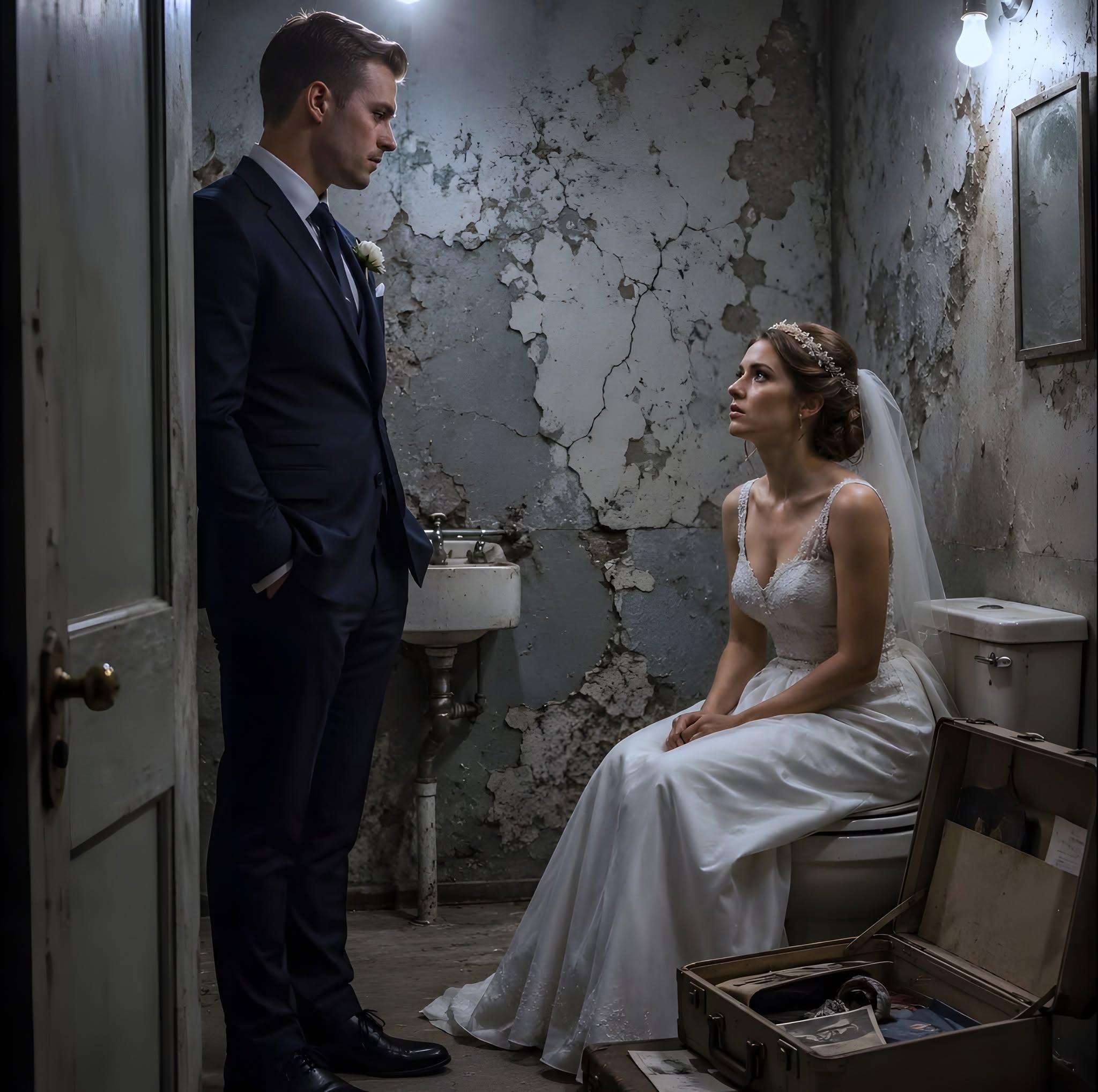
A Millionaire Married the Poor, Plain-Looking Gardener Just to Get Revenge on His Ex! But on Their First Night as Husband and Wife, He Discovered She Had Been Hiding Something No One in His World Was Ready For…
That night, none of it helped.
The glass in his hand had gone warm. He had been holding it for almost an hour, staring through the windows while the same conversation replayed in his head until it no longer sounded like memory. Vanessa Carlisle’s voice. Her diamond bracelet tapping against the marble counter. The clean, almost bored way she had ended their engagement three months earlier.
“You’re reliable, Grant,” she had said, as though reliability were a flaw in the foundation of a house. “But I don’t want reliable anymore. I want to feel alive.”
She had left him for a venture capitalist with a louder laugh, a smaller fortune, and a reputation for making disastrous decisions look glamorous. Grant could have survived the betrayal. What had lodged under his skin was the audience. The whispers at charity dinners. The sympathetic looks from men who hated him. The women who tilted their heads and asked how he was “holding up,” as if Vanessa had not humiliated him in front of the entire world he had spent his life mastering.
He finished the drink and set the glass down too hard.
By morning, the idea had become a plan.
It was not a kind plan. He knew that. Kindness had never built Whitaker Capital. Kindness had never kept competitors from circling. Kindness certainly had not kept Vanessa from making him the punch line of Seattle’s wealthiest rooms.
He would marry someone Vanessa would never expect. Someone outside their polished, poisonous little circle. Someone real enough to make Vanessa look as hollow as she was. The marriage did not have to be romantic. In fact, romance would only complicate it. It needed to be visible, believable, and useful.
He found her in the garden behind his Medina estate just after sunrise.
The property sloped toward the lake, all glass walls, stone terraces, and clipped hedges arranged with the kind of taste money could purchase but not invent. Grant had never paid much attention to the gardeners except to approve invoices and complain when the hydrangeas failed to bloom evenly. That morning, though, he stopped near the rose beds and watched a young woman kneel in the damp soil with a pair of pruning shears in one gloved hand.
Her name was Emma Hayes. He remembered it from payroll only because she had once written him a direct email about replacing imported shrubs with native plants. No one on his staff ever wrote to him directly unless something was on fire or expensive. She had been polite, precise, and annoyingly right.
Now she sat back on her heels, pushing a strand of brown hair away from her cheek with the back of her wrist. There was dirt on her sleeve and a streak of it near her jaw. She looked nothing like the women Grant had spent years sitting beside at benefit galas. No diamonds. No practiced laugh. No expression carefully arranged for whoever might be watching.
“Good morning, Mr. Whitaker,” she said when she noticed him.
“Morning, Emma.” Her name came easier than he expected. “How long have you been working here?”
She blinked, surprised that he had asked. “Almost two years. Since the landscaping company took over the redesign.”
“And you like it?”
“The garden?” She looked around, as if the answer were obvious. “Yes. It’s beautiful. A little too controlled, maybe, but beautiful.”
A different employee would have stopped at the compliment. Grant studied her face, waiting for embarrassment or apology. Neither came.
“Too controlled?” he asked.
Emma returned to trimming the rose cane in front of her. “Everything here is told exactly where to grow. Plants don’t always like that.”
Against his will, Grant almost smiled. “You think my roses resent me?”
“I think your roses would survive you.”
For the first time in weeks, the anger in him shifted. Not softened. Shifted. He stood there longer than he meant to, watching the clean confidence of her hands, the unshowy care she gave each plant. She had no idea that while she worked, he was measuring her place in a game she had never asked to play.
Over the next several days, Grant found reasons to walk through the garden. At first, Emma answered his questions with the guarded professionalism of someone who understood exactly how large the distance was between the man who owned the estate and the woman paid to maintain it. But she did not flatter him. She did not shrink from him either. Slowly, he learned pieces of her life.
She lived in a modest apartment north of the city with her mother, whose kidneys were failing faster than insurance approvals could keep up. Emma had worked through community college, left before finishing when her mother got worse, and taken every extra shift her supervisor offered. She never said any of it as a complaint. She spoke of it plainly, as if exhaustion were a bill that arrived every month and had to be paid like any other.
That was the opening Grant needed.
He waited until a gray afternoon when the air smelled like rain and cut grass. Emma was rinsing soil from her tools near the potting shed when he approached.
“Could we talk?” he asked.
She looked up quickly. “Is something wrong with the beds by the west terrace? I told the crew those azaleas needed—”
“No. It’s not about the garden.”
Her posture changed. She set the hose down and pulled off her gloves, folding them together with careful fingers. “All right.”
Grant had negotiated mergers, hostile takeovers, lawsuits, and acquisition deals that made grown men sweat through their shirts. He had never felt as absurd as he did standing in front of his gardener, about to propose marriage as though he were offering a consulting contract.
“I want you to marry me,” he said.
Emma stared at him. Then she laughed once, not because it was funny, but because her mind had rejected the words before her manners could catch them. “I’m sorry?”
“It would be a legal marriage,” he said. “But not a traditional one.”
Her smile vanished.
Grant explained it cleanly, because clean explanations made ugly things easier to hold. He told her he needed a wife for public reasons. He told her Vanessa had humiliated him and would expect him to stay wounded. He told Emma that if she agreed, her mother would receive the best medical care available, with every bill covered. Emma would also receive enough money to secure a future beyond hourly work and constant fear.
By the time he finished, Emma’s face had gone still.
“So you want to rent me,” she said.
Grant’s jaw tightened. “That’s not what I said.”
“It’s what you meant.” She folded her arms, but her hands were not steady. “You want to use me to punish another woman.”
“I’m offering you something you need.”
“And taking something you want.”
“Yes,” he said. “That’s how agreements work.”
Emma looked at him for a long moment. Her eyes were hazel, darker in the cloudy light, and full of a disappointment that irritated him more than anger would have.
“You’re colder than people say,” she said softly.
Grant felt the words land and refused to show it. “Think about your mother.”
“That’s a cruel thing to say.”
“It’s an honest thing to say.”
She picked up her gloves and shoved them into her apron pocket. “I’m done talking to you.”
That night, Grant sent a packet to her apartment by courier. He included medical consultations from a specialist at a private clinic in Bellevue, a summary of treatment options, projected costs, and a proposed agreement drafted by his attorneys. He told himself it was efficient, not manipulative.
The next afternoon, Emma came to the estate carrying the envelope under one arm.
She found him in his study. The room was lined with books he rarely touched and awards he cared less about than people assumed. She stood on the other side of his desk, pale but composed.
“I read everything,” she said.
Grant waited.
“My mother has spent her whole life taking care of me. I won’t let pride take care of her now.” She placed the signed pages on his desk. “But don’t mistake this for trust. I’m doing this for her. Not for you.”
Grant took the contract, satisfied by the result and unsettled by the way she refused to lower her eyes.
“That’s understood,” he said.
“No,” Emma replied. “I don’t think it is.”
Within two weeks, the marriage license was filed, the announcement was released, and the Seattle social circuit did what it always did when money, romance, and scandal offered themselves up together. It leaned closer.
Their first major appearance as husband and wife came at a private reception in a downtown hotel ballroom overlooking the bay. Grant had chosen every detail with the precision of a man staging a corporate reveal. The lighting, the flowers, the seating chart, even the photographer placement—nothing had been left to chance.
Emma stepped from the elevator beside him wearing a navy dress selected by a stylist who had tried very hard not to look confused. It was elegant, but simple enough that Emma did not disappear inside it. Her hair was pinned back, her makeup light, her only jewelry a pair of pearl earrings Grant’s assistant had sent over that afternoon.
“You don’t have to grip my arm like it’s a railing,” he murmured as they entered the ballroom.
“I’m deciding whether to use it as one or break it,” she whispered.
He glanced down, and for reasons he did not care to examine, the corner of his mouth moved.
The room reacted exactly as he expected. Conversations slowed. Faces turned. Then came the polite smiles, the murmurs, the quick glances at Emma’s dress, hands, shoes, posture—every silent calculation wealthy people made while pretending to admire one another.
Grant felt the satisfaction he had been waiting for when he saw Vanessa across the room.
She wore red. Of course she did. Vanessa Carlisle never entered a room without making sure the room understood it had been entered. Her blond hair brushed her shoulders in perfect waves, and her smile sharpened the moment she saw Emma.
“Grant,” she said, gliding toward them with champagne in hand. “Well, this is unexpected.”
“Vanessa.”
Her eyes shifted to Emma with a sweetness so false it seemed almost theatrical. “And you must be Emma. I’ve heard so much about you.”
Emma’s fingers tightened slightly around Grant’s sleeve. “I doubt that.”
Vanessa’s smile flickered. “How charming.”
Grant stepped in before the exchange could tilt. “Emma is my wife.”
“Yes,” Vanessa said. “I saw the announcement. It was certainly memorable.”
A few people nearby pretended not to listen. Grant could feel them hovering at the edge of the moment, waiting for embarrassment. He had brought Emma here to be a symbol, and suddenly he noticed the cost of making someone stand beneath that kind of gaze.
“She’s honest,” he said. “Loyal. Strong. Qualities I’ve come to value more than I used to.”
Vanessa understood the insult immediately. Her lips tightened around a smile. “How refreshing for you.”
Emma did not speak until Vanessa moved away. “Was that for me or for her?”
Grant looked at the crowd. “Both.”
“That’s what I thought.”
The evening should have gone badly for Emma. Grant had expected discomfort, awkward answers, perhaps even a mistake he could smooth over with a hand on her back and a well-timed laugh. Instead, Emma surprised him.
When a woman with an emerald necklace asked if she had “really worked with flowers before marrying Grant,” Emma smiled as though the question had been reasonable.
“I still do,” she said. “Gardening is honest work. You can’t charm a plant into blooming. You actually have to care for it.”
The woman’s smile stiffened. A man beside her chuckled into his drink.
Across the room, Grant watched Emma move through humiliation without handing anyone the satisfaction of seeing her collapse. She was nervous. He could see it in the careful way she held her glass, the way she listened before answering. But she did not apologize for herself. She stood in a room designed to reject her and kept her dignity intact.
It bothered him that he admired her for it.
Later, Vanessa cornered him on a balcony where the cold air smelled faintly of salt and rain.
“Are you finished proving your point?” she asked.
Grant leaned against the railing, the city behind him. “I’m not proving anything.”
“Please.” She laughed softly. “You married the gardener. It’s practically performance art.”
He turned his head. “Does it bother you?”
“What bothers me is watching you embarrass yourself.”
“No,” he said. “What bothers you is that I didn’t stay where you left me.”
For a second, the old Vanessa appeared—quick temper beneath a polished surface. “You can dress this up however you want. She doesn’t belong in your world.”
Grant thought of Emma answering questions without flinching. He thought of the dirt on her sleeve the first morning he had really looked at her.
“Maybe that’s what recommends her,” he said.
Vanessa stepped closer, voice lowering. “You and I know each other, Grant. We always have. You can pretend she understands you, but she doesn’t.”
He did not answer at once. The truth was that Vanessa did know parts of him. She knew his ambition, his pride, the cold discipline that had made him rich. But she did not know the man who had stood in the garden and been told his roses would survive him.
“That’s enough,” he said.
When he returned to the ballroom, he found Emma near the beverage table with a glass of club soda in her hand. Relief crossed her face before she could hide it, and something in him shifted again.
“You holding up?” he asked.
“Better than your ex-fiancée, I think.”
This time he did smile.
The marriage had begun as revenge. That night, as Emma stood beneath the glittering lights with her chin lifted and her shoulders tense, Grant began to understand the danger of choosing a real person for a false purpose. Real people did not stay where you placed them. They pushed back. They surprised you. They made the game harder to control.
And Grant Whitaker hated losing control.
Emma’s first morning as Mrs. Whitaker began at a breakfast table long enough to feel accusatory.
The dining room faced the lake, with floor-to-ceiling windows and a chandelier that looked more suited to a museum than a place where people ate toast. Silver trays had been arranged along the sideboard. There were berries in porcelain bowls, pastries under glass, smoked salmon, eggs, coffee, juices, and three kinds of jam. Emma stood in the doorway for a moment, trying to understand how one person’s breakfast could require so many witnesses…
See more on the next page
Advertisement
To see the full cooking instructions, go to the next page or click the Open button (>) and don't forget to SHARE it with your friends on Facebook.