
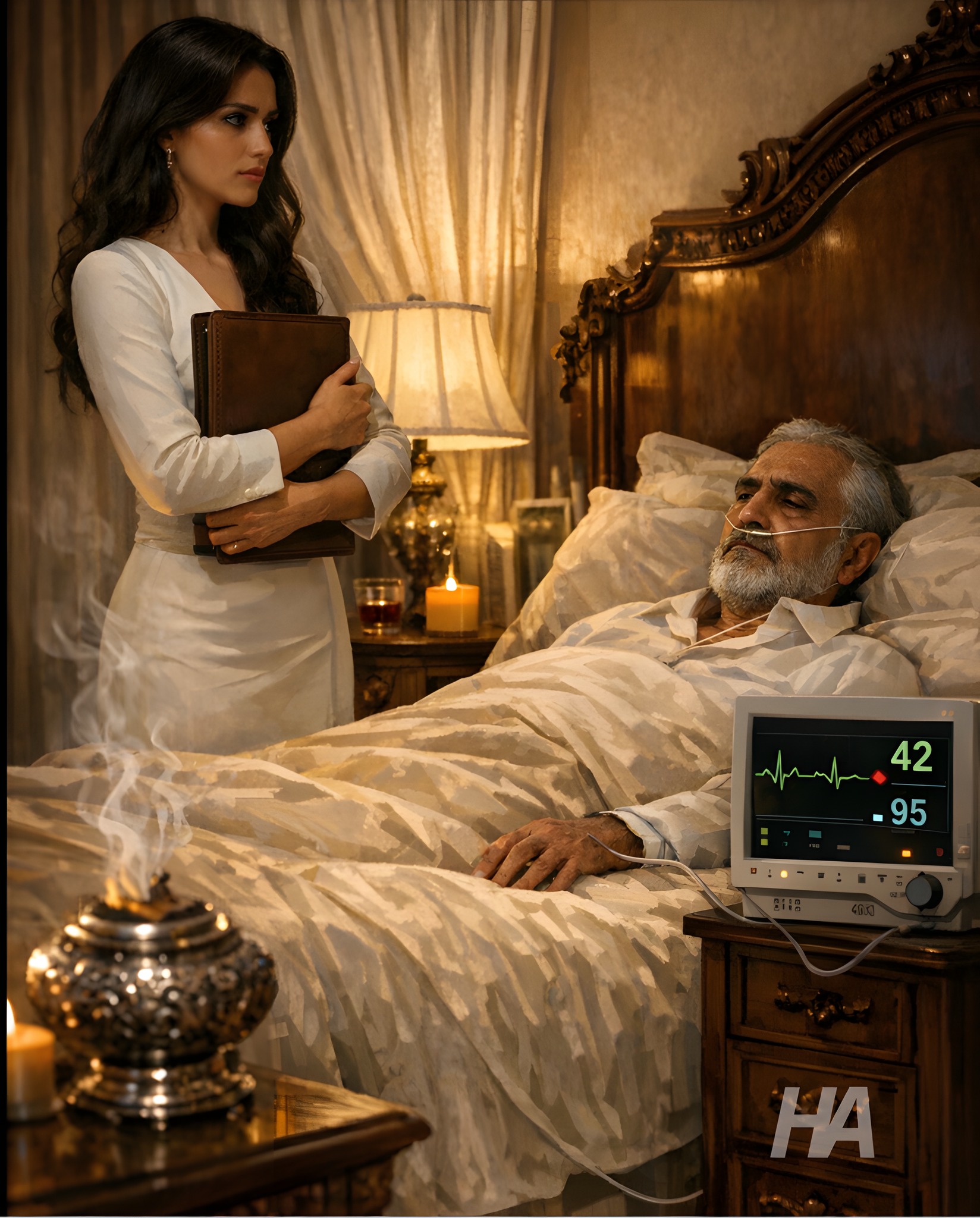
It is the first remotely humane thing your father has ever said about him.
“You know what happened to his face,” you say.
It is not quite a question.
Your father’s mouth flattens. “I know enough.”
“Which is?”
“That his own mother’s cousins delivered him to men who wanted leverage against the Alsabas when he was seventeen.” The words come slowly, each one placed with effort. “They kept him six weeks. He came back with half the country pretending pity and the other half pretending revulsion. He has had no interest in pretending anything since.”
The room seems to change temperature.
Seventeen.
You think of the black mask, the scarred hands, the stillness sharpened into habit. You think of how lightly the city uses the word monster for men who survive publicly in altered skin. You think of how quickly beauty becomes morality in elite circles, how eagerly the flawless are assumed kind and the marked assumed dangerous.
Dangerous to whom, he asked.
Your father watches your face carefully.
“So,” he rasps. “Which one?”
You could lie. Delay. Ask for another day and insult his intelligence. Instead you hear yourself say the truth before the sentence has finished forming.
“Zafir.”
It is not a romantic choice.
It is not even entirely an emotional one, though something restless and fierce had begun moving inside you the moment he answered your question about danger without a shred of performance. It is, above all, a strategic choice made by a woman with too few honest options.
But as soon as the name is spoken, the air in the room rearranges.
Your father closes his eyes for one second, perhaps in relief, perhaps in prayer, perhaps simply in exhaustion. “Then it will hold,” he murmurs.
“You sound certain.”
“I sound old enough to know which wolves bite cleanest.”
You should hate him for that sentence.
Part of you does.
Yet another part, the colder part raised in boardrooms and estate plans and legal warfare, understands exactly what he means.
The wedding happens forty-eight hours later.
No one calls it rushed.
The press calls it historic. Dynasty-preserving. A union of old money and older power. A strategic consolidation of two influential families spanning generations, industries, and continents. Society pages gush about your midnight-blue gown embroidered by hand in silver and pearl, about the antique emeralds at your throat, about the cathedral flowers imported at indecent cost. The guest list alone becomes national gossip.
No article mentions that your father died the morning after you chose.
No article mentions that you stood over his body with your new fiancé beside you and felt less like a bride than like a bridge someone had set on fire from both ends.
Your half-brothers from your father’s first marriage arrive, of course.
Sami and Nader, polished and grieving in that expensive masculine way that leaves room for inheritance calculations beneath the black ties. They kiss your cheek, speak in solemn voices about family continuity, and never quite conceal the fact that your sudden marriage ruined plans they had not yet dared speak aloud. If you had remained unmarried, vulnerable, politically exposed, there would have been ways to argue for “shared stewardship” after your father’s death.
Now there will not be.
They look at Zafir with the kind of caution men reserve for expensive weapons in unfamiliar hands.
Good, you think.
Let them.
The ceremony itself is almost surreal in its grandeur.
Gold candlelight. Ancient prayers. Silk. Arabic script braided through Mexican floral arrangements in a display so opulent it borders on satire. Khalil and Amar stand to one side as witnesses, stunning and unreadable in formal black. Khalil’s smile is perfect enough to cut glass. Amar looks faintly amused, as though this is all some enormous high-stakes joke he expects to continue enjoying.
Zafir stands beside you in black ceremonial dress, the matte mask transforming him into something half regal, half mythic. Guests glance at him and then quickly away, unable to decide whether staring is rude or irresistible. You do not look away.
You stand close enough to notice details no article will capture.
The old scar tracking pale and uneven above the edge of the mask near one temple. The minute tension in his jaw when your lawyer reads the marriage terms aloud. The steadiness of his hand when he takes yours during the vows, not warm exactly, but grounded. Real.
When the officiant tells him he may kiss the bride, the entire cathedral seems to lean in.
You brace yourself for a public performance. A strategic kiss. Controlled enough to satisfy custom, careful enough not to imply intimacy neither of you promised.
Instead, Zafir lowers his head only enough to touch his lips to your forehead.
The gesture is so restrained, so unexpectedly reverent, that for one disorienting second you cannot move.
A murmur ripples through the crowd.
Khalil’s expression flashes with irritation.
Amar looks openly delighted.
And you, absurdly, feel your throat tighten.
The reception is held at one of the Salgado estates in Cuernavaca, because public grief and private transition apparently require a property with fountains, citrus groves, and a ballroom large enough to host senators who pretend not to enjoy gossip. You dance once with your new husband beneath chandeliers while cameras flash.
He keeps one hand at your waist and one at your shoulder.
Correct. Controlled. Not cold, exactly, but disciplined. He does not pull you closer than necessary. Does not use the dance to stake ownership in front of the crowd. It should not matter that he does not. Yet it does.
“You look disappointed,” he says quietly as you move in precise circles through the center of the room.
“I look tired.”
“Yes,” he says. “But that is not the only thing.”
You lift your gaze to his mask. “You’ve known me for four days. Don’t become arrogant.”
The corner of his mouth shifts. “I’m not arrogant. I’m observant.”
The orchestra swells. Applause blooms when you turn. Guests are watching for chemistry, for drama, for signs of fracture. Instead they are given perfection. Two dynasties sealed under crystal and gold.
“I expected you to kiss me properly,” you say before you can stop yourself.
The admission shocks both of you.
His hand at your waist does not tighten, but you feel the awareness in him sharpen.
“In the cathedral?” he asks.
“You seemed concerned with symbolism.”
“I was.” His voice lowers. “I did not want the first time I touched you to be for them.”
The room keeps moving around you.
Music, candlelight, expensive perfume, the weight of emeralds at your throat. Yet for a fraction of a second it all recedes, because the sentence lands somewhere inconveniently deep.
Not for them.
You say nothing after that, because silence has suddenly become safer than language.
By midnight you are airborne.
The honeymoon destination is not disclosed publicly, which is one of the few things about this arrangement that feels almost merciful. The press is told “the Mediterranean,” which is vague enough to satisfy curiosity while revealing nothing useful. In truth, Zafir takes you to a private island resort off the coast of Oman, accessible only by seaplane and family clearance.
When you realize where you are headed, you glance at him across the dim private jet cabin.
“This feels less like romance and more like witness protection.”
“It can be both,” he says.
You cannot tell if he is joking.
The island is breathtaking in the kind of way that initially irritates you because beauty feels offensive this soon after burial.
White stone villas cut into a cliff above water so clear it looks invented. Date palms lit from below. Paths lined with lanterns and night-blooming flowers. The sea breathing against rock in long, patient sighs. A place designed for people who can afford to confuse privacy with innocence.
Your villa sits at the farthest edge of the property.
Of course it does.
Inside, everything is polished restraint. Sand-colored stone floors. Carved cedar screens. Linen curtains moving in the ocean breeze. One enormous bedroom opening onto a terrace with an infinity pool spilling visually into the sea. Two separate dressing rooms. A study. A dining patio. And, in the center of it all, one impossible bed large enough to host a political summit.
You stop at the threshold.
See more on the next page
Advertisement
To see the full cooking instructions, go to the next page or click the Open button (>) and don't forget to SHARE it with your friends on Facebook.