
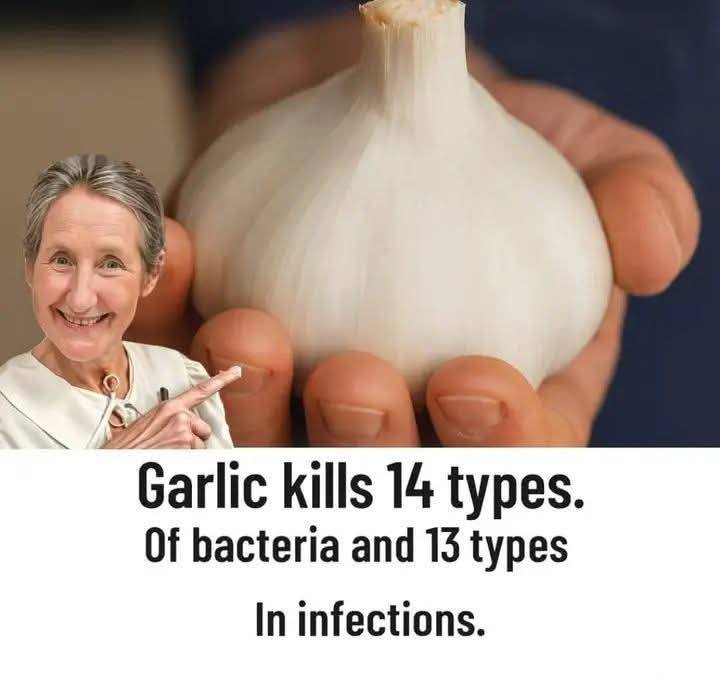
Garlic and Allicin: Why Scientists Continue Studying This Powerful Natural Compound
Garlic has been used for thousands of years not only as a flavorful ingredient, but also as a traditional wellness food in many cultures around the world.
One of the most fascinating compounds found in garlic is allicin.
Allicin forms naturally when fresh garlic is:
- Crushed
- Chopped
- Minced
This sulfur-containing compound is responsible for much of garlic’s strong smell and many of the biological effects researchers continue studying today.
Modern laboratory studies have explored how allicin and other garlic compounds may interact with bacteria, fungi, and other microbes.
However, experts strongly emphasize that garlic should never replace prescribed antibiotics or professional medical treatment for serious infections.
Why Allicin Interests Researchers
Scientists are especially interested in allicin because it appears to affect microbes through multiple mechanisms instead of only one.
This complexity may help explain why garlic has attracted attention for centuries in traditional medicine and modern laboratory research alike.
Researchers continue studying how garlic compounds may help:
- Slow microbial growth
- Support immune function
- Provide antioxidant activity
- Protect cells from oxidative stress
1. Interfering With Important Microbial Proteins
Allicin is highly reactive with sulfur-containing groups found inside proteins and enzymes.
These proteins are essential for many microorganisms because they help control:
- Energy production
- Cell repair
- Growth
- Reproduction
Laboratory studies suggest allicin may interfere with some of these systems, potentially weakening harmful microbes.
2. Possible Effects on DNA and RNA Activity
Some studies have also explored whether garlic compounds may interfere with microbial genetic processes involving:
- DNA
- RNA
Because these systems are necessary for microbial replication, scientists believe this may partly explain garlic’s antimicrobial activity observed in laboratory settings.
Research in this area is still ongoing.
3. Damage to Microbial Cell Membranes
Certain garlic compounds may also interact with the outer membranes surrounding microbial cells.
In some laboratory studies, this interaction appeared to:
- Weaken cell membranes
- Reduce stability
- Disrupt normal microbial function
When microbial membranes become damaged, survival becomes more difficult for the organism.
Garlic’s Broad Antimicrobial Research
Researchers have studied garlic against many different microorganisms in laboratory conditions, including both:
- Gram-positive bacteria
- Gram-negative bacteria
These groups differ in the structure of their protective outer layers, which affects how difficult they are to target.
Continue reading to discover the specific bacteria scientists have studied in garlic research — and the important limitations experts still emphasize →
To see the full cooking instructions, go to the next page or click the Open button (>) and don't forget to SHARE it with your friends on Facebook.